When storms hit fast, they sometimes pelt your car—dents pop up on hoods, roofs, even trunks. Not just surface marks, those hits might mess with how solid the metal feels underneath. Panels can warp slightly, and later, when you go to sell, buyers notice. Getting things fixed early helps avoid bigger issues down the road. How repairs work depends on dent size, location, and paint condition. Some fixes reshape metal without repainting; others take more steps. Insurance often covers it, yet the details matter before saying yes. Watch how techs handle edges near lights or doors—those spots are trickier than flat zones. Even small dents add up if ignored too long.
Measuring Damage After a Hail Storm
Hail striking a car seldom leaves even marks across the surface. Large stones combined with strong winds tend to carve out deeper dents, while smaller ones may only leave faint dimples. After the weather passes, walk around the vehicle slowly—take time to study each panel. Light matters here; avoid bright sun because it flattens shadows, making flaws harder to spot. Try shaded areas instead, or use handheld LEDs for clearer contrast.
Hail leaves more than just visible dents—it often creates tiny cracks in the paint layer. When the outer coating breaks due to strong hits, water finds its way underneath, slowly inviting rust. Glass and trim take a hit too, not only metal surfaces. A windshield might stay intact at first, yet minor chips spread wide when heat or cold swings happen. Spotting damage soon keeps repair bills smaller down the road.
The Gold Standard of Paintless Dent Repair
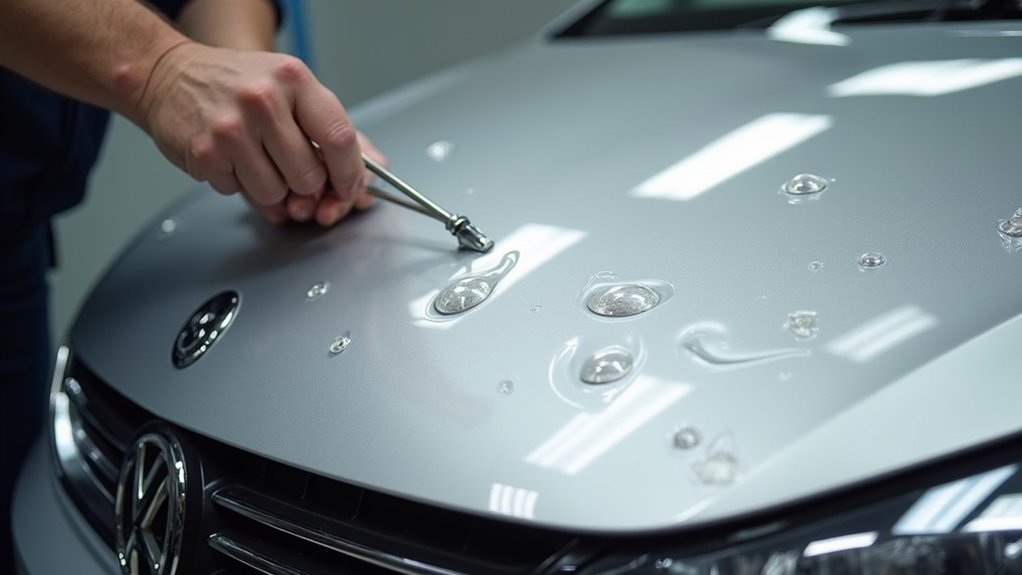
Most times when hail dents happen, fixing them without paint work is the go-to fix. Behind each bent car part, a skilled person works carefully from underneath. With tools made just for this job, pressure gets reversed slowly by hand.
PDR keeps your car looking just as it did when first made. Without needing any sandpaper, fill material, or fresh coats of paint, the original surface stays untouched—and that matters because factory layers usually last longer than new ones added later. Speed plays a big role too. Where a standard repair could tie up your vehicle for ages while sections are painted and left to set, a pro using dent removal techniques might fix storm damage much quicker. Some jobs wrap up fast enough you’d barely notice the downtime.
Traditional Bodywork When Needed
Most dents can be fixed with PDR, yet some damage goes too far. When hail hits hard enough to bend metal past its breaking point, repair needs more than pressure tools. Paint that splits on impact won’t hide with smoothing tricks alone. Surface prep takes over once the material fails to rebound. Sanding comes first, opening space for filler work where gaps remain. Matching color follows only after shape returns close to original form.
When damage goes beyond cost-effective fixes, swapping out parts becomes necessary. If there are too many dents, hoods and rear covers usually get swapped instead of fixed. Keeping things whole means the car stays safe on the road and matches itself in appearance. Whether paintless dent repair works depends on an expert’s judgment—sometimes deeper methods are needed to bring back full condition.
Navigating the Insurance Process
Hail damage often falls within the broader coverage of standard car insurance plans. Because storms count as natural events, making a claim usually avoids higher future payments, which commonly follow driver-caused crashes. Right away, capturing images of dents post-storm supports your case later on. Notes about when and where the weather hit add clarity down the line. Details like timestamps and nearby landmarks strengthen what you report.
A beam of focused light moves across the car as the insurance inspector checks each tiny dent. One by one, these marks add up to shape the repair estimate. Having your preferred body shop there helps—experience sharpens eyes, spots flaws others might pass over. Small dents, if overlooked, become big costs later. Techs who fix cars daily catch what paperwork misses.
The Importance of Resale Value
Most people forget how hail harm affects what your car might sell for later. Though tiny dents may seem harmless, having a record labeled “damaged by hail” can pull down resale worth fast. A buyer sees those untouched marks not just as flaws but as signs the owner didn’t care much. Dealers take out repair estimates before giving any number, shrinking what you could have earned.
Patches that hold up well, such as PDR, preserve how smooth the car appears. Since this method leaves no trace like fresh paint often does, records won’t flag past issues so clearly. Fixing dents today quietly supports what you’ve put into owning the vehicle.
Choosing the Right Professional
Some dents need more care than others. With hail damage, exactness matters just as much as taking your time. Choose a place that focuses only on storms’ aftermath. Workers there handle large numbers of cars while still paying close attention to small flaws.
Most temporary shelters showing up right after bad weather aren’t trustworthy—unless tied to a known local company. A real storefront matters; it means you can find them later if something goes wrong. When repairs miss the mark, tiny traces of damage linger even when paint shines again. Good work wipes those signs out completely.
Conclusion
When hail hits, it leaves dents—no surprise there. Yet that doesn’t mean your car stays ruined forever. Knowing about paintless dent repair helps make sense of better fixes. A skilled inspection often reveals what looks worse than it really is. Getting things checked soon after keeps rust away later on. Metal holds up better when nudges are smoothed quickly. Value drops slower if repairs happen while damage is fresh. Professionals spot hidden issues invisible at first glance.
Should your car have faced harsh weather lately, give Stone City a call for expert advice. When winds howl and skies open up, we step in with Site Integrity Audits—digging deep to uncover every hidden effect on your ride. Picture this: our crew walks around, eyes sharp, noting each mark, dent, or flaw others might miss. Through Detailed Visual Mapping, you see exactly what needs fixing, like following a trail through scattered debris. Paperwork piles high after storms? Not here—we hand over clean records suited for claims without confusion. Let time pass without worry; skilled hands reshape dents, fade scratches, return shine where it once lived.